What Is a Buying Window? (And How B2B Sellers Find Them)
A buying window is the specific period when a company is most likely to make a purchase decision. Most sales teams miss it entirely. Here's what it is, what triggers it, and how to catch it before your competitors do.
Most B2B sales advice focuses on who to contact.
The better question is when.
A buying window is the specific period when a company is actively in a position to make a purchase decision. Their budget is available. Their problem is acute. Their attention is on finding a solution.
Reaching them inside this window is completely different from reaching them outside it. Outside the window: your email is noise. Inside it: you're a solution arriving at exactly the right moment.
Why Buying Windows Exist
Companies don't buy on a continuous basis. They buy in response to events.
Something changes — internally or externally — and that change creates urgency. A contract ends. A new leader joins. Funding arrives. A competitor makes a move that disrupts the status quo.
Before the event: stable, not looking, not buying.
After the event: the window opens. They evaluate. They decide.
Then it closes again — sometimes for months, sometimes for years.
The sales teams that consistently outperform don't have better scripts. They're better at identifying when the window is open.
What Triggers a Buying Window
Funding Events
A Series A or Seed round means a company has budget they're under pressure to deploy. The first 30–60 days after a funding announcement is one of the highest-conversion windows in B2B sales — the company is hiring, building, and buying tools to support growth.
Here's how to approach funding announcements the right way — without sounding like the 40 other reps who saw the same TechCrunch post.
Hiring Patterns
When a company posts specific roles — growth, sales, operations, marketing leadership — they're signaling internal expansion. New hires create new needs.
- A company hiring its first SDR team needs outreach tools
- A company hiring a Head of Marketing needs content and analytics infrastructure
- A company hiring RevOps needs CRM and workflow tools
The job post tells you the need before they've started shopping. Job postings are one of the most underused B2B intelligence signals.
Leadership Changes
New executives evaluate existing vendors within their first 90 days. They arrive with their own opinions, their own preferred tools, and pressure to show results quickly.
A new VP of Sales will audit the sales stack. A new CMO will review the marketing tools. This is one of the cleanest buying windows in B2B — the trigger is public, the timeline is predictable, and the intent is almost certain.
Vendor Pain
When a company's current vendor starts failing them publicly — complaints on G2, Trustpilot, Reddit — those customers are in evaluation mode. They're unhappy. They're comparing alternatives. They're looking for a reason to switch.
Reaching a company in this moment, with a message that acknowledges the problem they're experiencing, is fundamentally different from cold outreach to a stable account. The Apollo review surge we documented is a live example of this signal firing right now.
Market Events
Competitor launches, regulatory changes, industry shifts — events that destabilize the status quo create urgency. If your competitor just raised prices, their customers are re-evaluating. If a new regulation just passed affecting your ICP, companies need solutions now.
Buying Window vs Warm Lead — What's the Difference?
A warm lead is someone who expressed interest in you — downloaded a resource, visited your pricing page.
A buying window is different. It's about a company's internal state changing in a way that makes them receptive to what you sell — regardless of whether they've ever heard of you.
A company might have zero interest in your product today and be a perfect buyer in six weeks — because they're about to close a funding round or hit a wall with their current tool. The transition is the window. Interest follows opportunity.
How Most Sales Teams Miss Buying Windows
The typical outreach process: build a list, import it into a sequencing tool, send the same five emails to everyone over three weeks, repeat.
The problem is that list was built at a single point in time. It doesn't update when a company raises funding next month. It doesn't flag when they post a role that's a perfect signal for your offer. It doesn't notice when their current vendor starts getting hammered in reviews.
Static lists miss dynamic windows. That's why Apollo and similar tools give you the same leads as everyone else — they're all looking at the same static snapshot, with no intelligence about who is ready.
How to Find Buying Windows (Two Ways)
The Manual Way
- Set Google Alerts for "[competitor name] alternative" and "[competitor name] reviews"
- Monitor LinkedIn for leadership changes at target accounts
- Watch job boards for roles that signal your ICP's growth
- Check funding databases weekly for new raises in your target sector
This works. It's just time-consuming and easy to let slip.
The Automated Way
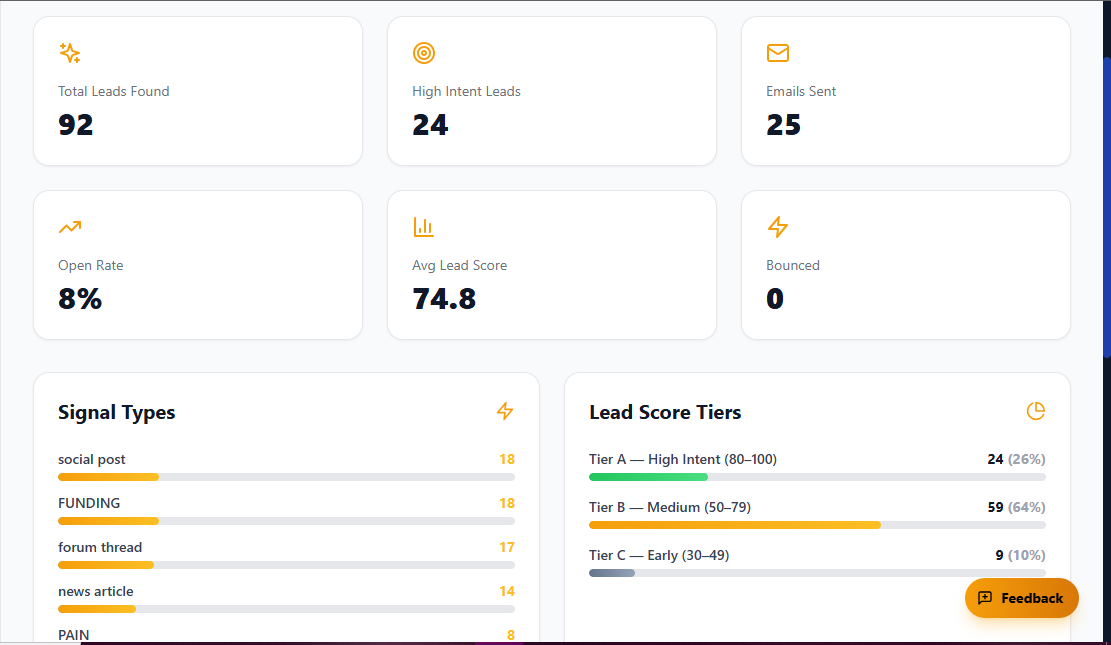
Lytus C.O.R.E monitors 12 public data sources continuously, detects when buying window signals converge for the same company, and alerts you with a plain-English explanation of what changed and what angle to use. You define your ideal customer once. C.O.R.E watches the market and tells you when your moment arrives.
The One Question That Changes Everything
Before every outreach session, ask this:
"Has anything changed for this company recently that makes them more likely to need what I sell?"
If yes — reach out now, lead with the change.
If no — wait. Use the time to find companies where something has changed.
That single question, applied consistently, will do more for your pipeline than any subject line test. Buyer intent signals are how you answer it at scale.
150 founding member spots, start with your free Signal Gameplan. 90-Day Challenge from $1,799. →